
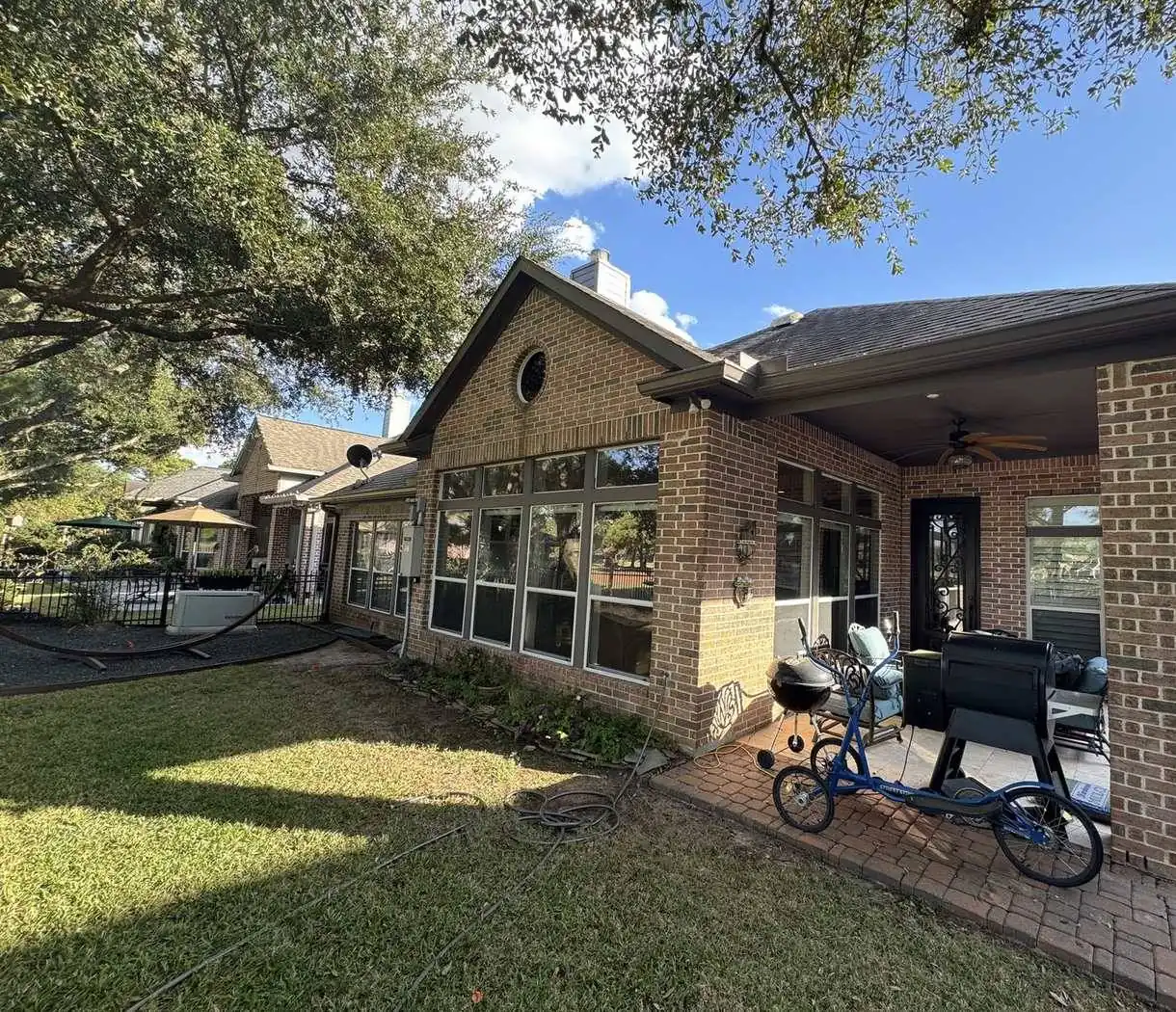
Pressure washing in Houston, by people who have to paint it afterwards.
Brick, siding, stucco, fences, driveways and patios. We wash exteriors the way a painting company has to, because when the coating goes on over it we're the ones coming back if it fails.
122 Google reviews, 5.0 average.
The wash decides whether the next coat of paint stays on.
Pressure washing in Houston is the exterior cleaning step that removes dirt, chalked-out old paint and the biological growth this climate puts on masonry, and on a house it is the step that decides whether the next coat of paint stays stuck.
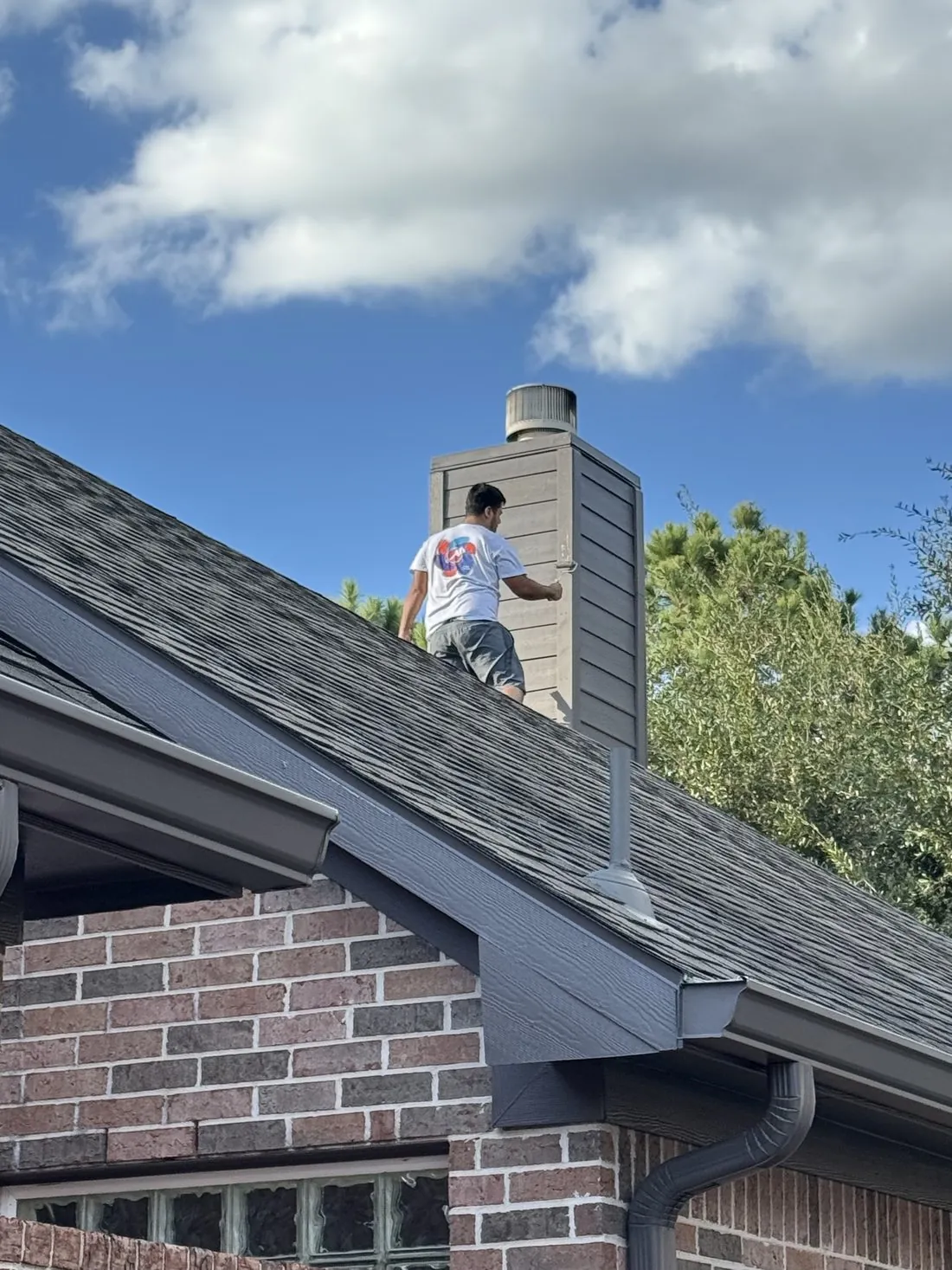
Rise and Prime Painting washes exteriors across Houston and the north side, in Tomball, Spring, The Woodlands, Conroe and Humble. Ray Gomez owns the company, he's been in the trade over 20 years, and he comes out and looks at the surface himself before anything gets priced.
We paint what we wash. If we push water behind your siding and then put a coating over the moisture we trapped, the blistering that turns up months later is a problem we made, and that's why the pressure on your house is set by what the surface can take.
- House, concrete, wood and commercial
- Aerial lift certified for height
- Written price before anything starts
Tell Ray what needs washing.
Tell him what you're looking at. He'll come out, look at the surface himself, and put the price in writing before anything gets booked.
- 122 Google reviews, 5.0 average
- EPA Lead-Safe Certified Firm
- Fully insured
Every surface wants something different.
The dial that's right for a driveway will ruin a cedar fence, and whoever's holding the wand has to know the difference going in.
House washing, brick and siding
The whole envelope, including what you cannot see from the street.
Houston brick grows a green film on whichever elevation gets the least sun, and it's almost always the north side. It reads as dirt but it's biological, which is why scrubbing only moves it around and a proper wash takes it off. Siding's the more delicate half of the same job. Hardie and vinyl will both take water behind them if you push hard enough at the wrong angle, and the seams and butt joints are exactly where that happens. The fix is a wider tip, more distance, and working downward so water sheds off the lap instead of under it.
Mildew, mold and the green side of the house
Houston humidity grows things on masonry. Pressure alone does not kill them.
Blasting organic growth off a wall takes away what you can see and leaves what you can't, and in a climate this humid it's back to a visible film within months. Treat the surface first, let the solution do the work, and lower pressure gets you further: easier on the substrate, and it stays clean a lot longer. If somebody quotes you a wash purely on how much pressure they've got, that's a wash you'll be buying again next year.
Fences and wood
Cedar is soft, and a pressure washer can fur or gouge the grain in seconds.
You can spot the damage afterwards and it's unmistakable: a furred, fuzzy grain, and on softer boards a visible stripe wherever the wand paused. Once the grain's raised it stays raised, and stain soaks into it unevenly from then on. Fences want distance, a wide fan and constant movement. If the fence is getting stained afterwards it also wants time to dry properly, because stain on wet wood is a finish failure waiting to happen.
Fence and deck stainingConcrete, driveways and patios
The one surface where more pressure is usually the right answer.
Concrete's the exception to nearly everything above. It's hard, it usually isn't getting painted, and it holds oil, rust and tire marks that need real pressure to lift. A surface cleaner is what keeps a driveway from coming out striped, and stripes are the giveaway of a rushed job you'll see every time you pull in. Older concrete with surface crazing gets a gentler pass, because water finds a crack faster than you do.
Commercial and multi-unit exteriors
Storefronts, breezeways, dumpster surrounds and work above ladder height.
Commercial washing is mostly a scheduling problem wrapped around a height problem. It has to happen around tenants and trading hours, and a lot of it sits above what a ladder can safely reach. Ray's aerial lift certified, so a three-story elevation or a covered breezeway ceiling is a normal job for us and doesn't need a specialist subcontract. For a property manager, setting up a repeating schedule up front beats booking each wash on its own.
Commercial paintingWashing before a repaint
Part of the exterior scope when we repaint.
When a wash is the first step of a repaint, it's part of that job and it's priced inside it. What changes is who's accountable at the end. A separate washing company hands you a clean wall and drives away. We hand ourselves a clean wall and then have to warranty whatever goes on top of it, so the wash gets done for the coating's sake and not for the photograph.
Exterior house paintingThe house this work goes on.
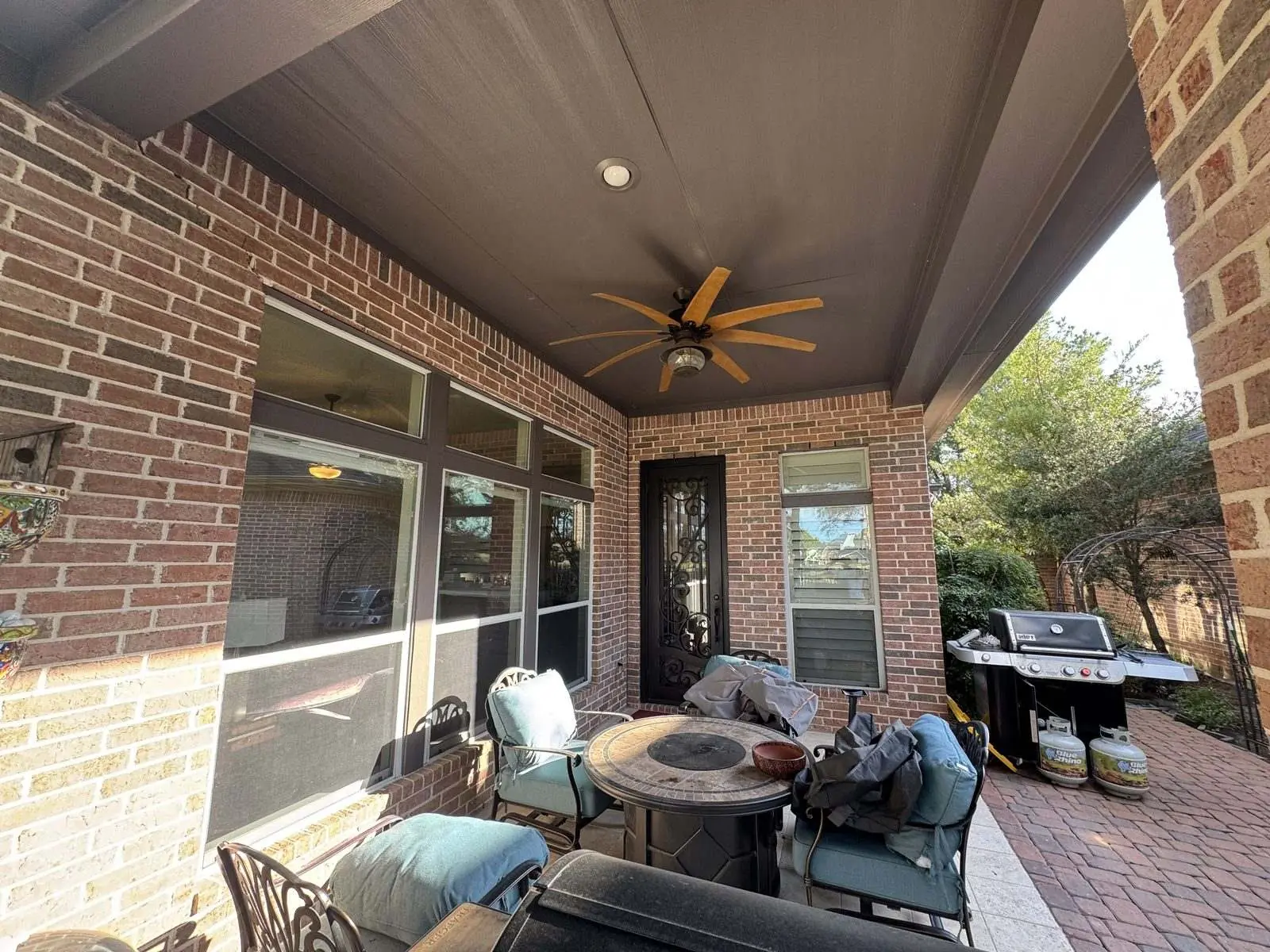
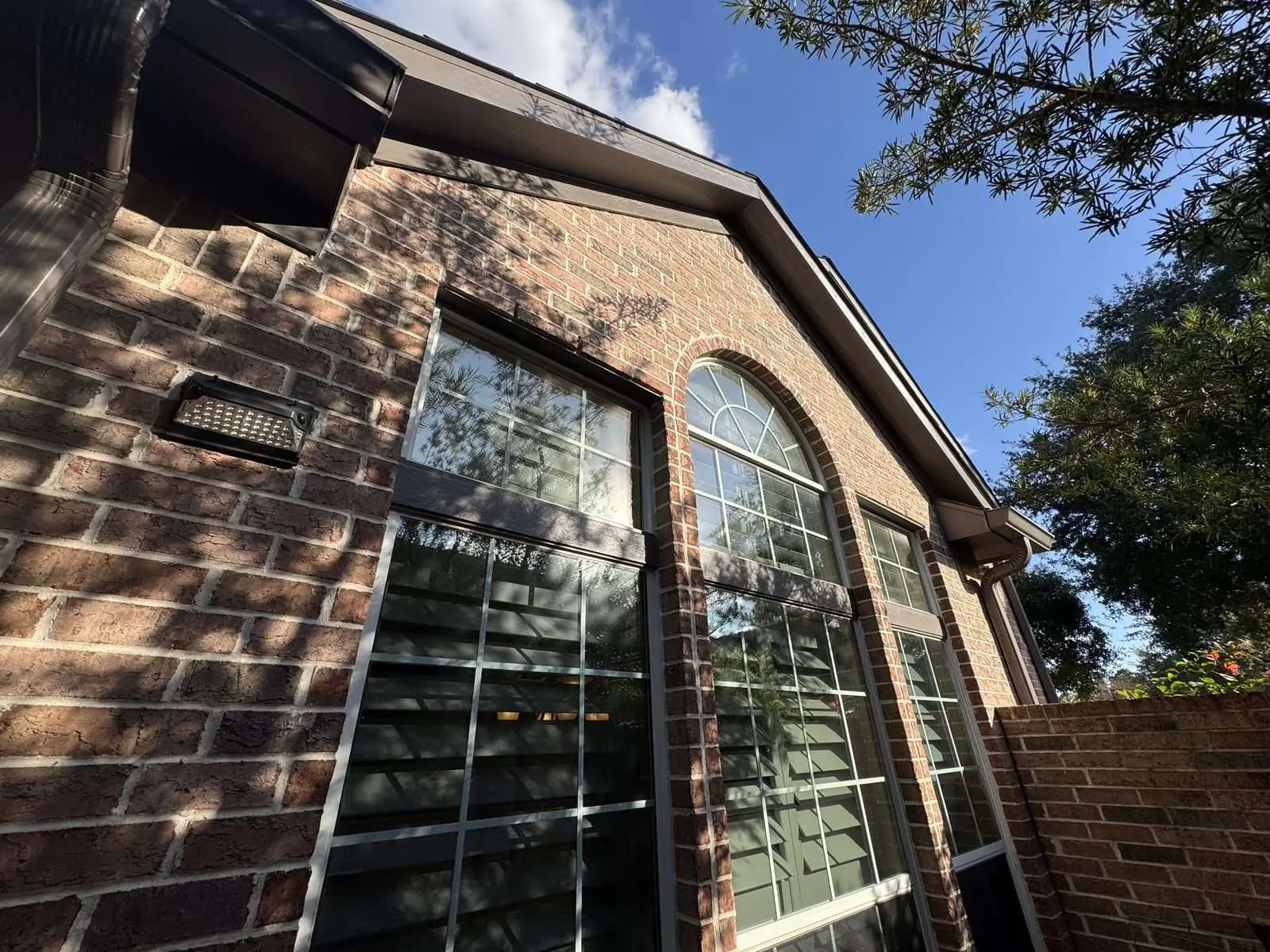
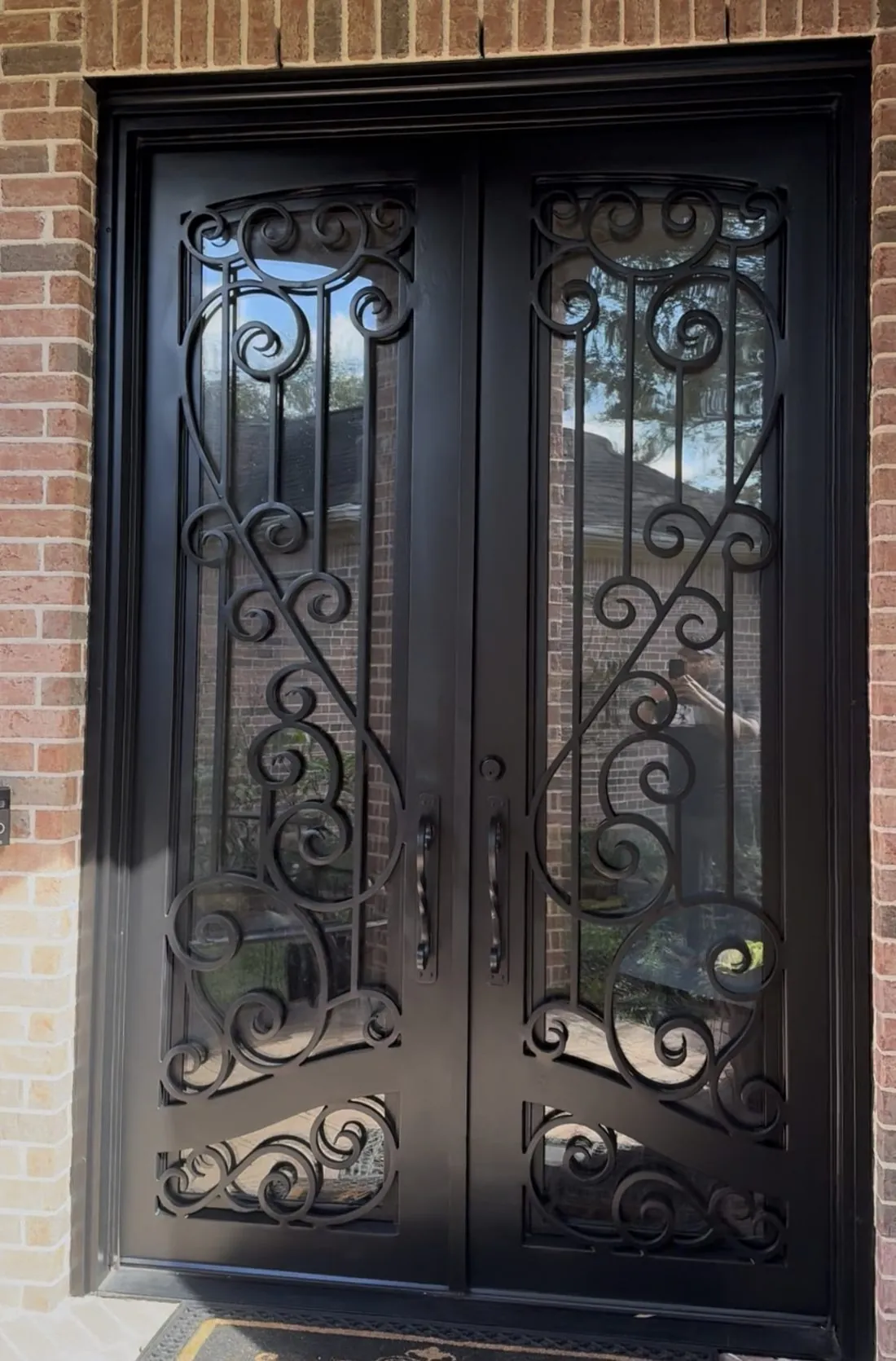
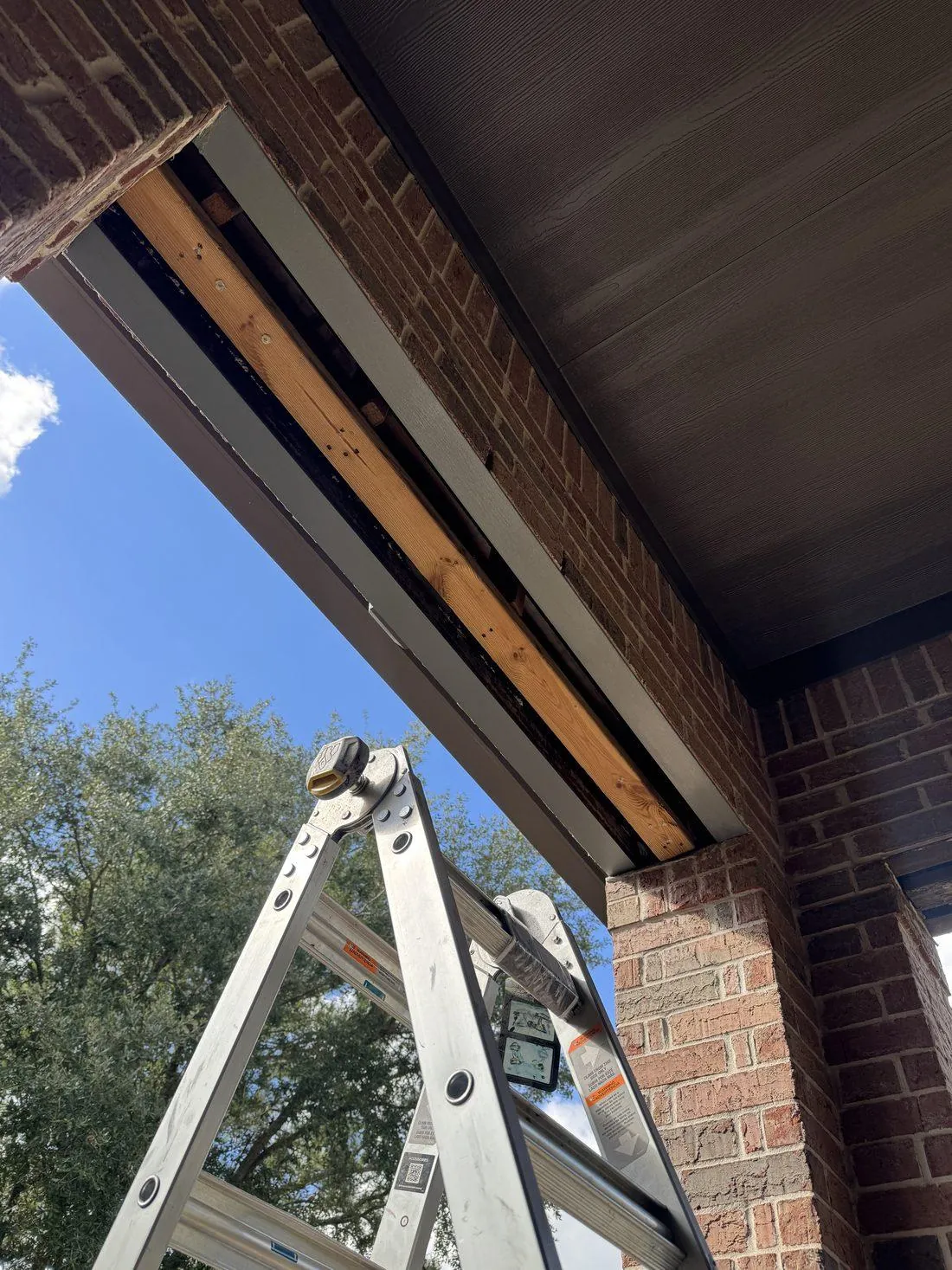
Brick, soffit, fascia and the eave line, which is exactly where water ends up if a wash is done carelessly.
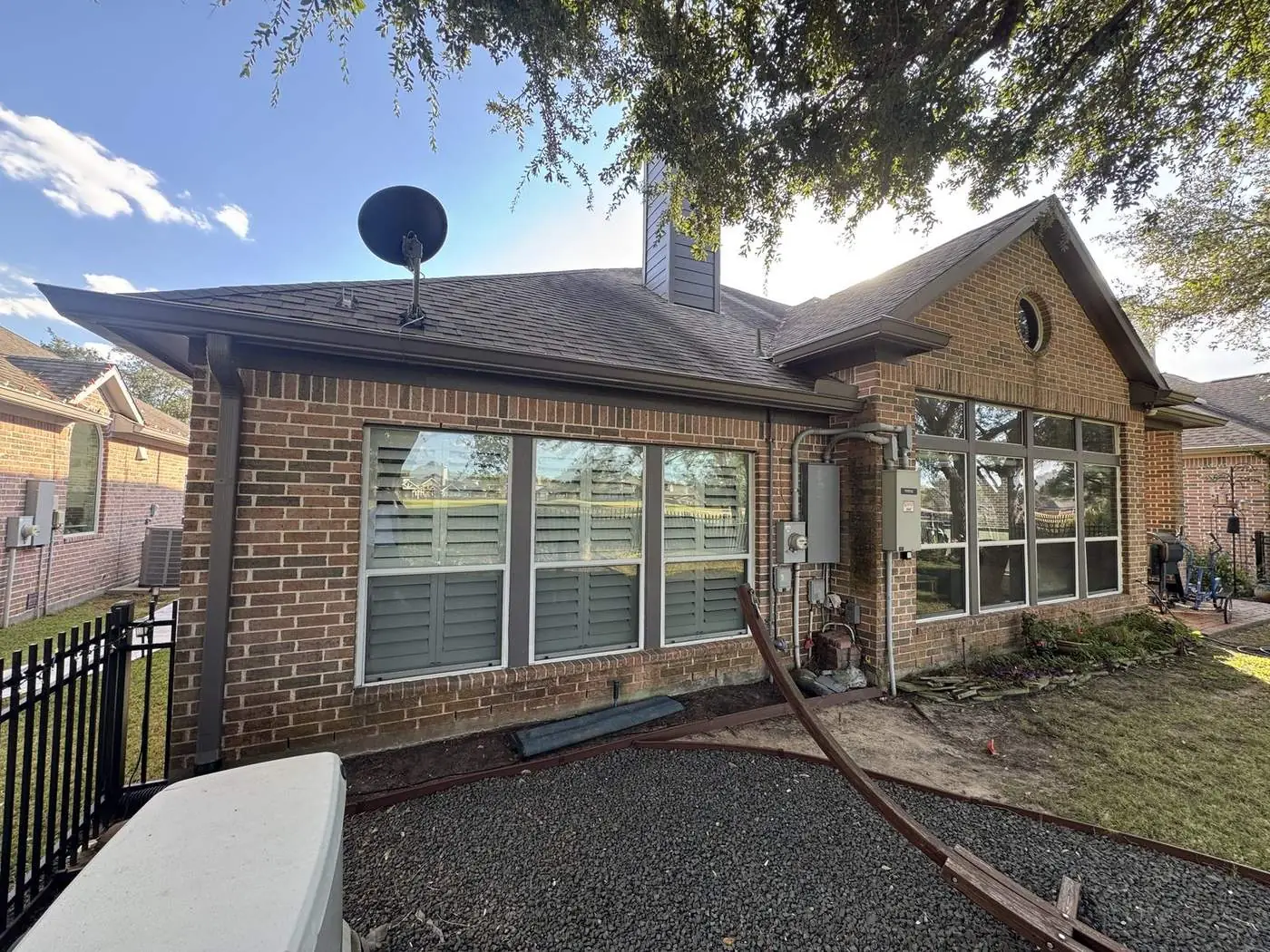
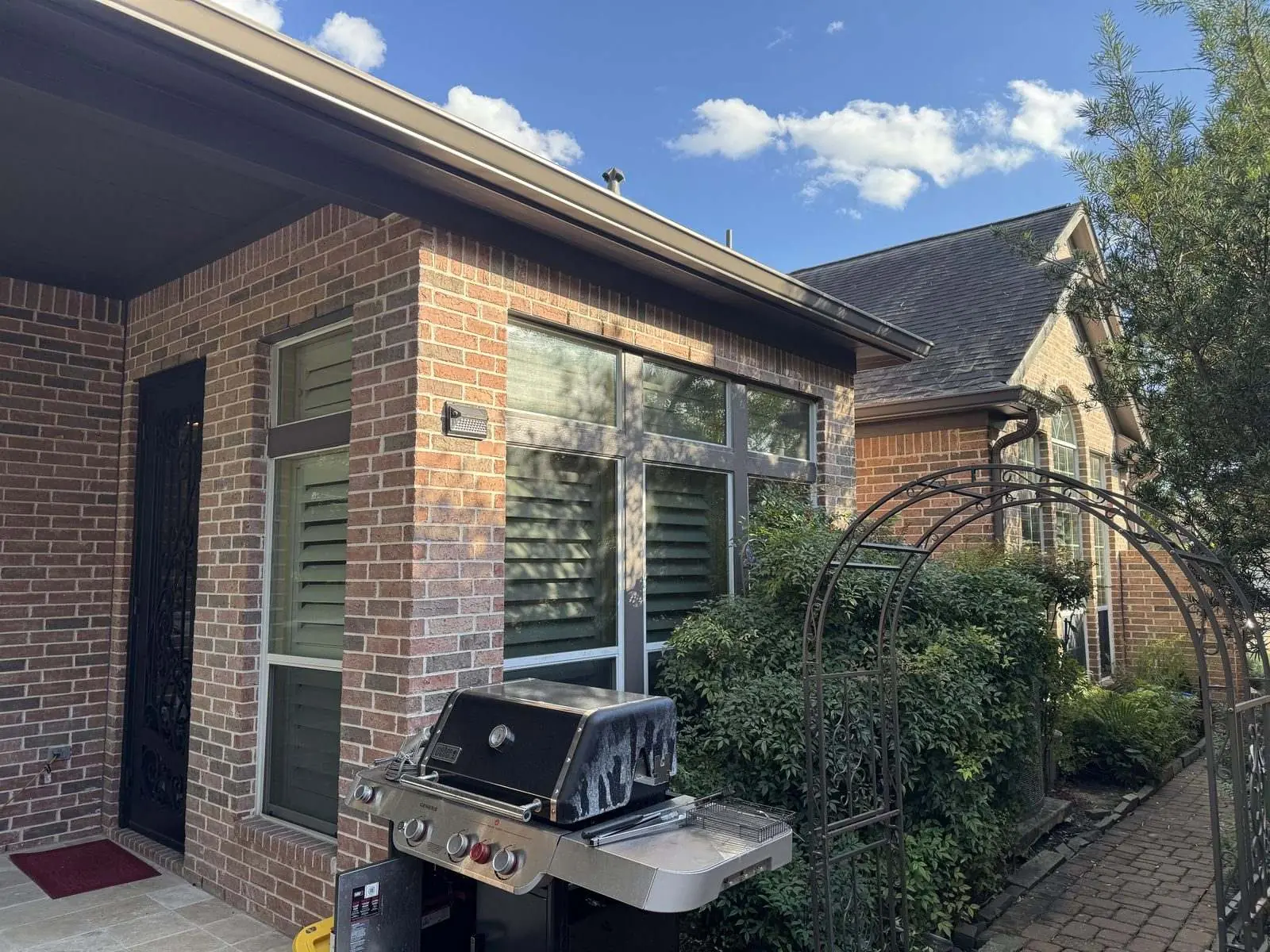
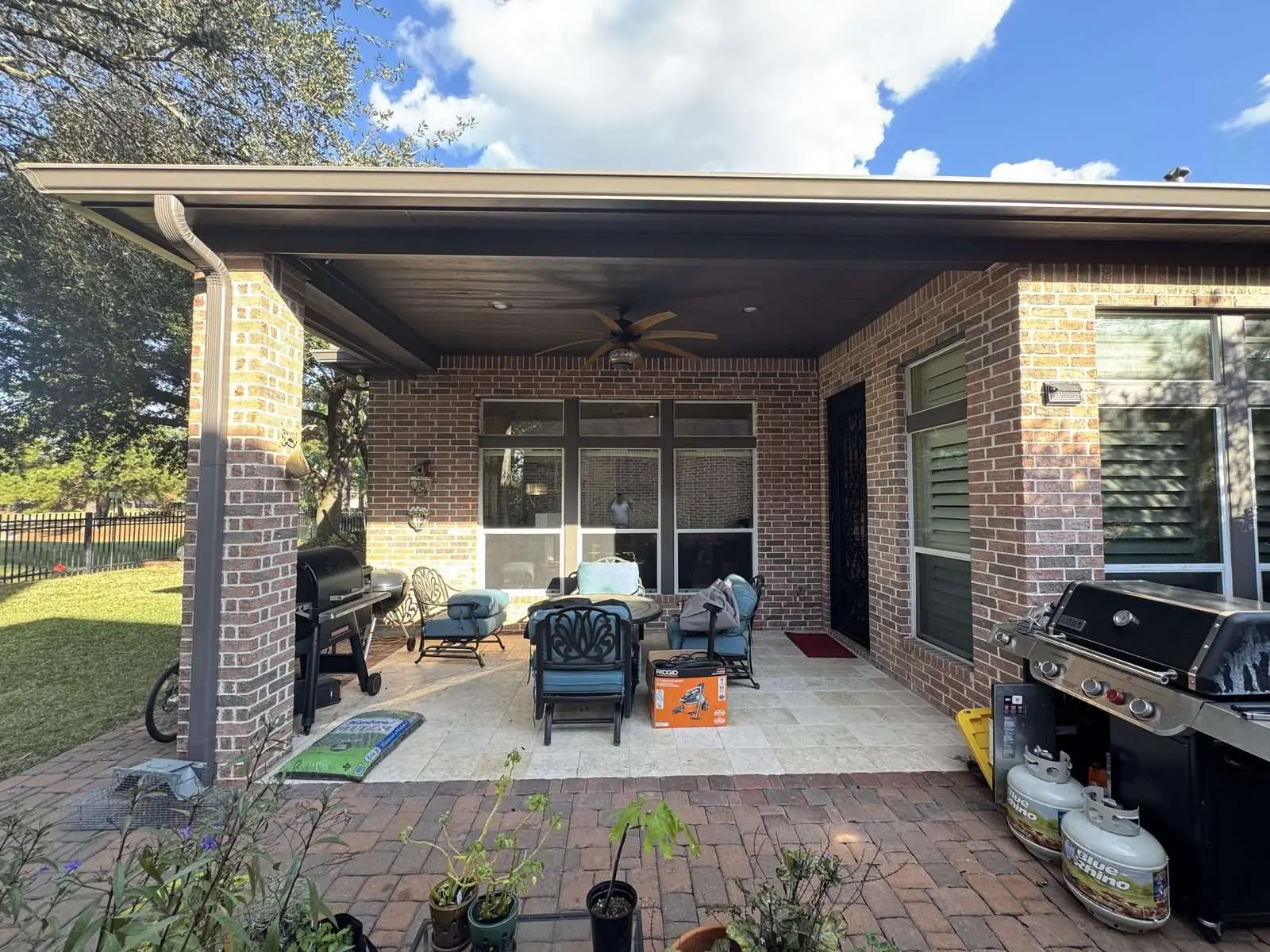
Four ways a pressure washer damages a house.
All four are common and all four are avoidable. What makes them expensive is the delay: they surface months after the day, by which point whoever caused them is long gone.
Water driven behind the siding
Spraying upward under a lap, or straight into a butt joint, puts water somewhere nothing is designed to dry it out. It sits in the wall cavity, and any coating that goes on over it blisters from behind.
Raised grain on wood
Cedar and pine are soft enough that pressure tears the surface fibers. The board comes out furred and it stays that way. Stain then soaks into the damaged grain unevenly, and those stripes are permanent.
Striping on concrete
A bare wand cleans in a narrow arc, so a driveway done wand-only comes out in visible bands. It's the most obvious sign of a rushed job, and the only fix is washing the whole slab again so it all matches.
Blown window and door seals
Older double-glazed units and tired weatherstripping give way under direct pressure, and then water's inside the glass or inside the room. Openings get checked before the wand ever comes out.
What happens, in order.
The wash happens in the right sequence, and that sequence is most of what separates one that lasts from one that looks fine until it dries.
Ray looks at the surface
Brick, Hardie, stucco, cedar and concrete all behave differently, and so does the same material in different condition. Nothing gets priced off a square footage guess over the phone.
Plants, fixtures and openings covered
Beds get wet down and covered, light fixtures and outlets get protected, and windows and doors get checked for the gaps that let water inside.
Treat, then wash
Organic growth gets treated and given time to work, so the pressure can come down. Low pressure that removes the problem beats high pressure that just moves it around.
Worked in sections, top down
Sections overlap so nothing dries with a hard line across it, and water flows down over surface that's already been washed instead of streaking clean work below it.
Walk it with you
Wet surfaces all look uniform. We walk it once it's dried back, because that's when you can see what came off and what didn't.
What we find once it's clean.
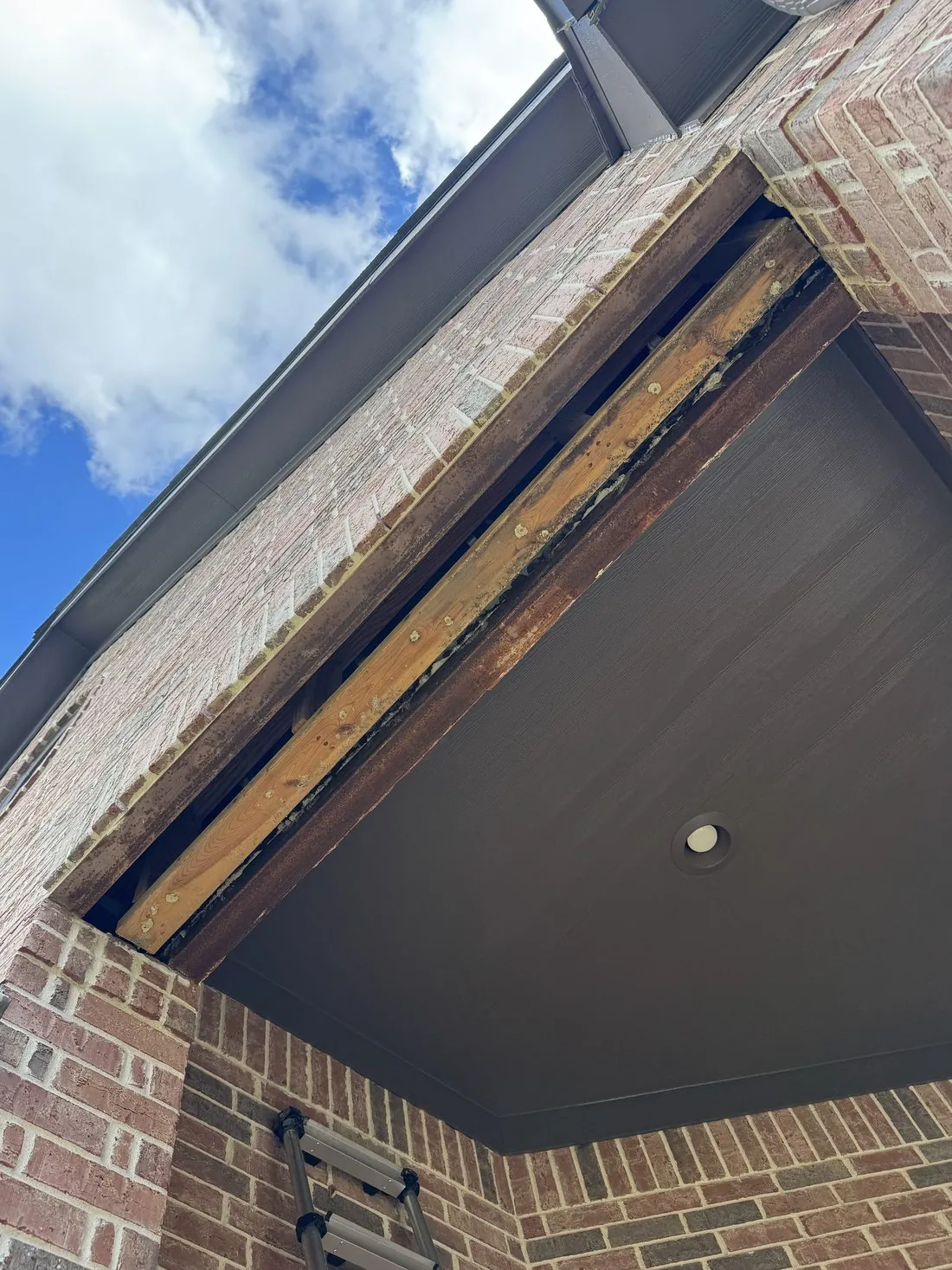
Washing is also how you find out what you're dealing with. Rot behind a fascia board, a failed caulk line, bare wood under a coating that was hiding it. A quote written before the wall is clean is a quote written on a guess.
Take it from the people who've hired us.
The longer answers.
None of this is required to book a wash. It's here for anyone who wants to know exactly what they're buying before they call.
Read the detail on pressure, timing and what we cannot promise
Why we will not publish a pressure number
A PSI figure sounds like a specification and mostly isn't one. The same pressure at the tip lands as a completely different force on the wall once you account for tip angle, distance, flow rate and how long it sits in one place. A wide tip held well back does less damage at a high number than a narrow tip held close at a low one. What decides the outcome is whether the person holding it is reading the surface, and no number on a website can tell you that.
Soft washing, and when it is the right call
Soft washing means low pressure plus a cleaning solution that does the work chemically, then a rinse. On surfaces carrying biological growth it's the better answer, because the chemical treatment kills the growth at the root, so it stays away a lot longer. Roofs, painted wood, older siding and anything fragile lean this way. Hard surfaces carrying physical soiling, concrete especially, lean the other. A Houston house can easily need both on the same visit, soft where the growth is heavy and a harder pass where it's just soil.
Painting afterwards
If a repaint is the reason for the wash, the wash belongs to the paint job and it's priced inside it. Drying time gets called on the substrate and that week's weather, because masonry holds moisture long after it feels dry and the humidity here stretches it out. Coating over a surface that isn't dry yet is the failure that undoes everything else. What goes on next matters as much as the wash, and choosing the best exterior paint for humid climates starts with the surface under it.
What we do not do
We won't promise a turnaround before Ray has seen the property, quote a wash over the phone off a square footage, or tell you a clean surface stays that way for a set number of years. In this climate it doesn't, and anybody promising otherwise is just selling you the next wash along with this one.
Two markets
Rise and Prime works Houston and the Baltimore metro, where the company started in 2016 and where Ray holds Maryland license MHIC #120401. Pricing isn't the same in the two markets and we don't publish one sheet pretending it is.
Pressure washing questions.
How much does pressure washing cost in Houston?
Pressure washing in Houston is priced on the surface and its condition, not on square footage alone, so Ray writes the price after he's looked at the property. Two houses the same size aren't the same job when one's carrying ten years of growth on the north elevation and the other was washed last spring. If the wash is part of an exterior repaint, it sits inside that price and isn't billed on top of it.
What is the difference between pressure washing and power washing?
Power washing heats the water and pressure washing doesn't, and around Houston the two words get used for the same service anyway. Heat helps on grease and oil, which is why it shows up on commercial concrete more than on the side of a house. On residential work, the tip, the distance and whether the surface got treated first decide the result far more than heat or raw pressure does.
Can pressure washing damage my house?
Yes, pressure washing can damage a house in ways that don't show up right away. Water driven behind siding, a raised and furred wood grain, stripes across a driveway, blown window seals: a pressure washer in a hurry does all four. A painting company weighs this differently, because if we wash badly and then paint over the moisture we trapped, we're the ones coming back to fix the blistering for free.
Do I need to pressure wash before painting the exterior?
Most exterior repaints start with pressure washing or another cleaning method the surface calls for, because paint bonds to the surface itself. Anything already sitting there, whether that's chalked-out old coating, dust, pollen or biological growth, is what your new paint grips instead, and that's the layer that lets go first. Washing is the cheapest part of an exterior job, and skipping it undoes the most expensive part.
How long should I wait to paint after washing?
You wait until the substrate itself is dry, not just the surface, before painting over a washed exterior. Masonry holds moisture well after it looks and feels dry to the hand, and Houston humidity stretches that timeline out further than a drier climate would. The timing moves with the material, the weather that week and how much sun the elevation gets, so Ray calls it once he's standing in front of the wall.
Is pressure washing covered by your 3-Year Workmanship Warranty?
Pressure washing on its own is not covered by the 3-Year Workmanship Warranty, and we'd sooner say that plainly than let the badge imply otherwise. It covers failures caused by our workmanship on surfaces we prepared and painted, so when washing is the prep step inside an exterior repaint, it sits inside that cover. A standalone wash with no coating going over it is a cleaning service, and in this climate a clean wall won't stay that way for three years no matter who washed it, which is why the cover follows the paint, never the wash.
Do you wash driveways and patios as well as the house?
Yes, driveways and patios get washed too, and concrete is a different job from the house itself. Flatwork gets a surface cleaner instead of a bare wand, which is what keeps a driveway from coming out with visible bands across it. Once the house is washed, a dirty driveway next to it is hard to miss.
Do you serve my area?
Rise and Prime offers pressure washing services across Houston and the north side: Tomball, Spring, The Woodlands, Conroe and Humble. Ray's on site for estimates across all of it, and the company works the Baltimore metro too, which is where it started.
Where we wash.
The same treat-first approach in every one of them. What changes town to town is the housing stock and the tree cover, and that is what changes the prep.
Pressure washing in Tomball
Older stock around the town center and new build out toward 249.
Pressure washing in Spring
Big subdivisions and big elevations, with plenty of direct Texas sun.
Pressure washing in The Woodlands
Trees, shade and moisture, with plenty of fences and decks among the mix.
Pressure washing in Conroe
Lakeside properties, acreage and long drives.
Pressure washing in Humble
Established neighborhoods, with Lake Houston and the airport both close by.
Book the wash.
Tell us what needs cleaning and how it is getting dirty. A wash that is about to be followed by paint is a different job from a wash that has to stand on its own, and that changes what it costs.
If the paint underneath is already letting go, a wash will not save it. That is exterior house painting, and Ray will tell you which one you actually need.
Get my free estimateor call Ray on (443) 743-8052